

Designing High-Impact Drip Campaigns for Student Admissions: A Comprehensive Guide for Schools and Educational Institutions

Educational institutions in North India face unprecedented competition for student admissions, with over 40,000 students from Delhi NCR alone pursuing higher education opportunities annually[1]. As traditional marketing methods become less effective, drip campaigns have emerged as a powerful solution in digital marketing or schools, delivering 119% higher click rates compared to regular email marketing and generating an impressive $36 return for every dollar spent[2][3]. This comprehensive guide explores how schools can leverage automated drip campaigns to capitalize on heavy traffic during admission seasons while optimizing for modern SEO requirements.

Understanding the Digital Landscape for Educational Marketing
The educational marketing landscape has transformed dramatically, with 52.2% of website traffic now coming from mobile devices and prospective students increasingly relying on digital platforms for school research[4]. In North India's competitive market, institutions must adopt sophisticated digital strategies to stand out among thousands of options available to families.
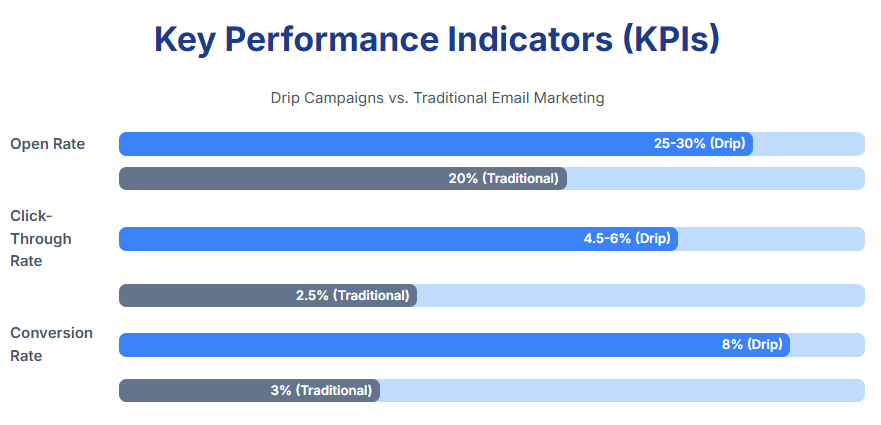
Performance comparison of different email marketing approaches for educational institutions
During peak admission periods—typically running from October to November—school websites experience significant traffic surges as families actively research educational options[5]. This presents a critical opportunity for institutions to implement high-impact drip campaigns that nurture prospects through the entire enrollment journey, from initial interest to final admission.
The Science Behind Effective Drip Campaigns
Drip campaigns represent a fundamental shift from traditional broadcast marketing to personalized, behavior-driven communication. Unlike generic email blasts, these automated sequences deliver targeted messages based on specific user actions, creating a more engaging and relevant experience for prospective families.
Key Performance Indicators for Educational Drip Campaigns
Successful drip campaigns in education focus on several critical metrics:
Open Rates: Educational drip campaigns typically achieve 25-30% open rates, significantly higher than traditional email marketing's 20% average[6]. This improvement stems from personalized subject lines and targeted timing based on user behavior.
Click-Through Rates (CTR): Well-optimized drip campaigns deliver 4.5-6% click-through rates, compared to 2.5% for standard emails[6]. The sequential nature of drip campaigns builds trust and engagement over time, encouraging more meaningful interactions.
Conversion Rates: Perhaps most importantly, automated drip sequences can achieve 8% conversion rates for admission inquiries, compared to just 3% for traditional campaigns[6]. This dramatic improvement directly impacts enrollment numbers and institutional revenue.

Leveraging Admission Season Traffic Patterns
Educational institutions must strategically time their drip campaigns to align with natural admission cycles. Research shows that most schools in Delhi begin accepting applications around October to November, creating a concentrated period of high-intent traffic[5].
Pre-Admission Season Preparation
Before peak season arrives, institutions should establish comprehensive drip sequences targeting different audience segments:
Early Interest Nurturing: Beginning in August-September, schools should launch awareness campaigns targeting parents researching options for the following academic year. These campaigns focus on institutional strengths, campus life, and academic programs.
Application Preparation: As admission windows approach, drip campaigns should shift to practical information—application deadlines, required documents, and admission criteria. This phase typically generates the highest engagement rates.
Decision Support: During peak admission periods, campaigns should provide testimonials, virtual tours, and direct communication channels with admissions staff to support families making final decisions.
North India Market Dynamics and Competition Analysis
The North Indian educational market presents unique opportunities and challenges for institutional marketing. Delhi NCR alone hosts some of India's most prestigious schools, including The Shri Ram School, Modern School, and DPS RK Puram, creating an intensely competitive environment[1].
Regional Market Characteristics
High Academic Expectations: North Indian families typically prioritize academic excellence, making achievement data and alumni success stories crucial elements in drip campaigns.
Technology Adoption: The region shows strong adoption of digital communication channels, with families comfortable receiving and responding to automated communications via email, SMS, and WhatsApp[7].
Decision-Making Patterns: Research indicates that Delhi students are well-informed and career-focused, often coming with clear understanding of their educational preferences[1]. This allows for more targeted and sophisticated drip campaign strategies.
Competitive Landscape Analysis
Leading educational institutions in North India increasingly invest in digital marketing strategies to maintain competitive advantages. Schools implementing marketing automation report 14.5% productivity increases and significantly improved lead conversion rates[8].
Private schools particularly benefit from drip campaigns, as they must actively attract students rather than relying on geographic assignment. The projected $98.9 billion private school market underscores the importance of effective marketing strategies[9].
Technical Implementation: SEO, NLP, and AEO Optimization
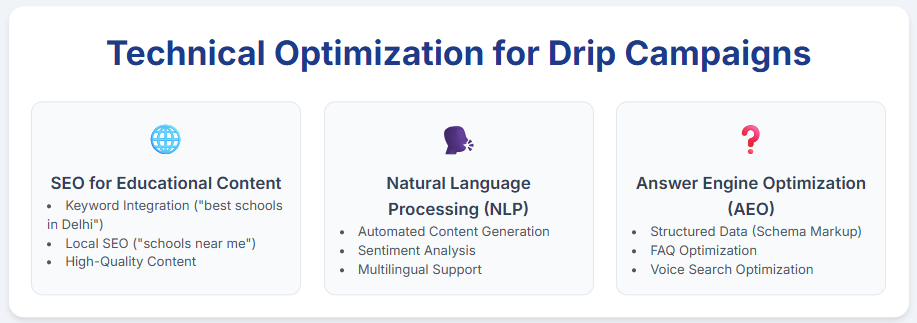
Modern drip campaigns must integrate advanced technical optimization to maximize visibility and effectiveness. This includes traditional SEO, Natural Language Processing (NLP), and Answer Engine Optimization (AEO) strategies.
Search Engine Optimization for Educational Content
Educational institutions should optimize drip campaign content for search visibility through:
Keyword Integration: Targeting high-intent keywords like "best schools in Delhi," "private school admissions," and "school enrollment process" within email content and landing pages[10].
Local SEO: Implementing location-specific optimization to capture searches for "schools near me" and city-specific queries. This is particularly important for North Indian institutions targeting local families[11].
Content Quality: Creating comprehensive, authoritative content that addresses common parent concerns about education quality, safety, and academic programs[12].
Natural Language Processing Applications for Educational Institutes
NLP technology enhances drip campaigns through:
Automated Content Generation: AI-powered systems can create personalized email content based on user behavior and preferences[13].
Sentiment Analysis: Analyzing email responses and website interactions to gauge prospect interest and adjust campaign messaging accordingly[14].
Multilingual Support: In North India's diverse linguistic landscape, NLP can automatically translate content into regional languages, expanding reach and accessibility[14].
Answer Engine Optimization (AEO) Strategies for Schools
As search behavior evolves toward AI-powered answer engines, educational institutions must optimize for direct answer delivery:
Structured Data Implementation: Using schema markup to help search engines understand and display institutional information in featured snippets[15].
FAQ Optimization: Creating comprehensive FAQ sections that answer common admission questions in formats easily extracted by AI systems[16].
Voice Search Optimization: Adapting content for conversational queries that families might use with voice assistants[15].
Building High-Impact Drip Campaign Sequences for Schools and Colleges
Effective drip campaigns for student admissions require careful sequencing and personalization. The most successful campaigns follow a proven framework that guides prospects through the enrollment journey.

Welcome and Orientation Sequence
The initial contact sets the tone for the entire relationship. Welcome drip campaigns should immediately acknowledge the family's interest while providing valuable information about next steps[17].
Email 1 - Immediate Welcome: Sent within minutes of form submission, this email confirms receipt of inquiry and provides immediate value through links to virtual tours or program information.
Email 2 - School Introduction: Delivered 24-48 hours later, this message presents the institution's mission, values, and unique selling propositions through engaging storytelling[17].
Email 3 - Practical Information: Sent after 3-5 days, this email addresses common questions about admission processes, academic programs, and school policies[17].
Nurturing and Engagement Sequence
Once initial interest is established, drip campaigns should focus on building deeper connections and addressing specific concerns:
Academic Excellence Stories: Sharing success stories of current students and alumni to demonstrate educational quality and outcomes[18].
Campus Life Insights: Providing behind-the-scenes looks at daily school life, extracurricular activities, and community events[18].
Parent Testimonials: Including authentic reviews and experiences from current families to build trust and credibility[18].
Decision Support and Conversion Sequence
As families approach decision-making, drip campaigns should provide concrete support for the enrollment process:
Application Guidance: Step-by-step instructions for completing applications, including required documents and deadlines[19].
Financial Information: Transparent communication about fees, payment plans, and available scholarships or financial aid[19].
Direct Communication Opportunities: Offering scheduled calls with admissions staff, virtual meetings, or in-person campus visits[19].
Measuring Success and Optimization
Successful drip campaigns require continuous monitoring and optimization based on performance data. Educational institutions should track multiple metrics to ensure campaign effectiveness and ROI.

Essential Performance Metrics
Lead Progression Tracking: Monitor how prospects move through the enrollment funnel, identifying bottlenecks and optimization opportunities[20].
Engagement Over Time: Track how engagement rates change throughout the campaign sequence to identify optimal messaging frequency and content types[6].
Revenue Attribution: Calculate the direct financial impact of drip campaigns on enrollment numbers and institutional revenue[20].
Channel Performance: Analyze which communication channels (email, SMS, WhatsApp) deliver the highest engagement and conversion rates[21].
Advanced Analytics and Reporting
Modern drip campaign platforms provide sophisticated analytics capabilities:
Predictive Analytics: Using AI to forecast which prospects are most likely to convert, allowing for targeted resource allocation[22].
Behavioral Segmentation: Automatically grouping prospects based on engagement patterns and interests for more personalized communication[23].
Multi-Touch Attribution: Understanding how different campaign touchpoints contribute to final enrollment decisions[24].
Technology Stack and Implementation
Implementing effective drip campaigns requires careful selection of marketing automation tools and integration with existing systems.
Core Platform Requirements
CRM Integration: Seamless connection with customer relationship management systems to ensure data consistency and comprehensive prospect tracking[25].
Multi-Channel Capabilities: Support for email, SMS, WhatsApp, and social media messaging within unified campaign sequences[7].
Advanced Personalization: Dynamic content capabilities that adapt messages based on prospect characteristics and behavior[26].
Analytics and Reporting: Comprehensive tracking and reporting features to measure campaign performance and ROI[27].
Popular Tools for Educational Institutions
LeadSquared Education CRM: Specifically designed for educational institutions, offering automated workflows and comprehensive applicant tracking[25].
Element451: Higher education-focused platform with advanced personalization and multi-channel communication capabilities[28].
Salesforce Education Cloud: Enterprise-level solution with extensive customization options and powerful analytics[26].
Best Practices for North Indian Educational Institutions
Based on successful implementations across the region, several best practices emerge for maximizing drip campaign effectiveness:
Cultural Sensitivity and Localization
Regional Preferences: Adapting communication styles and content to align with North Indian cultural values and educational expectations[1].
Language Considerations: Providing content in Hindi and other regional languages where appropriate, particularly for parents who may be more comfortable with native languages[14].
Timing Optimization: Scheduling campaigns to align with local festivals, holidays, and cultural events that might impact family decision-making[1].
Compliance and Privacy Considerations
Data Protection: Ensuring all campaigns comply with Indian privacy regulations and international standards like GDPR[29].
Consent Management: Implementing clear opt-in processes and respecting unsubscribe requests to maintain positive relationships with prospects[29].
Transparency: Providing clear information about how prospect data is used and protected throughout the campaign process[29].

Future Trends and Emerging Technologies
The educational marketing landscape continues evolving rapidly, with several emerging trends that institutions should consider:
Artificial Intelligence Integration
AI-Powered Personalization: Advanced algorithms that create highly personalized content based on individual prospect behavior and preferences[8].
Predictive Enrollment Modeling: Using machine learning to forecast enrollment patterns and optimize resource allocation[22].
Automated Content Creation: AI systems that generate personalized email content, reducing manual effort while maintaining quality[13].
Immersive Technologies
Virtual Reality Campus Tours: Providing immersive campus experiences for prospects who cannot visit in person[8].
Augmented Reality Applications: Interactive features that allow families to visualize campus facilities and programs[8].
Interactive Video Content: Personalized video messages and interactive content that adapts based on viewer preferences[8].

Conclusion
High-impact drip campaigns represent a fundamental shift in educational marketing, offering unprecedented opportunities to engage prospective families during critical decision-making periods. For North Indian educational institutions, the combination of sophisticated automation, cultural sensitivity, and technical optimization creates powerful competitive advantages.
The evidence is clear: institutions implementing well-designed drip campaigns achieve 119% higher click rates, $36 return for every dollar spent, and significantly improved conversion rates compared to traditional marketing approaches[2][3]. As the educational landscape becomes increasingly competitive, schools that master these automated nurturing systems will be best positioned to attract and enroll the students who will drive their long-term success.
The key to success lies in understanding your specific market dynamics, implementing robust technical infrastructure, and continuously optimizing based on performance data. By following the strategies outlined in this guide, educational institutions can create drip campaigns that not only survive the competitive North Indian market but thrive within it.
Frequently Asked Questions (FAQs)
1. What is a drip campaign for student admissions in schools?
A drip campaign for student admissions is an automated series of personalized emails or messages sent to prospective students and their families over time. These campaigns nurture interest, provide timely information about admissions, and guide prospects through each step of the enrollment process, increasing engagement and conversion rates.
2. Why do school websites experience heavy traffic during admission and exam seasons?
School websites see increased traffic during admission and exam seasons because prospective families and students actively seek information about application deadlines, admission criteria, exam schedules, and results. This surge presents a valuable opportunity for schools to engage visitors with targeted marketing and helpful resources.
3. How can schools in North India use drip campaigns to improve admissions?
Schools in North India can use drip campaigns by segmenting audiences (such as parents, students, and alumni), sending timely updates about admissions, sharing testimonials, and providing reminders about deadlines. These automated campaigns help schools stand out in a competitive market and nurture leads more effectively.
4. What are the key benefits of using drip campaigns for school admissions?
The main benefits include higher email open and click-through rates, improved lead nurturing, increased enrollment conversions, and the ability to deliver personalized content at scale. Drip campaigns also save time through automation and provide measurable insights for ongoing optimization.
5. How can schools optimize their drip campaign FAQs for answer engines and voice search?
To optimize FAQs for answer engines and voice search, schools should:
Use clear, concise question-and-answer formats.
Provide direct answers within 40–60 words.
Incorporate structured data (FAQ schema markup) on web pages.
Use conversational language and include relevant keywords.
Regularly update content to ensure accuracy and relevance.


Comments